South Australia's New AED Laws: Is Your Building Compliant for 2026?
If you own or manage a commercial building in South Australia, here's something you need to know, right now. As of January 1, 2026, the Automated External Defibrillators (Public Access) Act 2022 is officially in effect. And if your building isn't compliant? You could be facing fines of up to $20,000.
But let's not focus on the scary stuff. This legislation isn't about punishment, it's about saving lives. Every year in Australia, approximately 25,000 people experience sudden cardiac arrest outside of a hospital. Without immediate intervention, survival rates plummet. But here's the good news: when a defibrillator is used within the first few minutes, survival rates can increase to over 70%.
South Australia is leading the charge in making AEDs accessible to everyone. And we're here to help you understand exactly what you need to do to comply, and become a genuine lifesaver in your community.
Who Needs to Comply? ❤️
The new legislation targets non-Crown owned buildings, facilities, and vehicles that are accessible to the public. If your property falls into any of these categories, it's time to take action:
Commercial offices and workplaces
Shopping centres and retail complexes
Sporting clubs and fitness centres
Educational institutions (schools, universities, TAFEs)
Public swimming pools
Aged care facilities
Theatres and entertainment venues
Hotels and hospitality venues
Community centres
Early childhood education and care sites
Basically, if members of the public can access your building, and it meets the size requirements, you're likely affected.
Important note: Crown-owned buildings and government facilities were required to comply by January 1, 2025. So if you're in the private sector, the spotlight is now firmly on YOU.
The Size Requirements: How Many AEDs Do You Need?
Here's where it gets specific. The legislation uses floor space to determine compliance:
The 600m² Rule
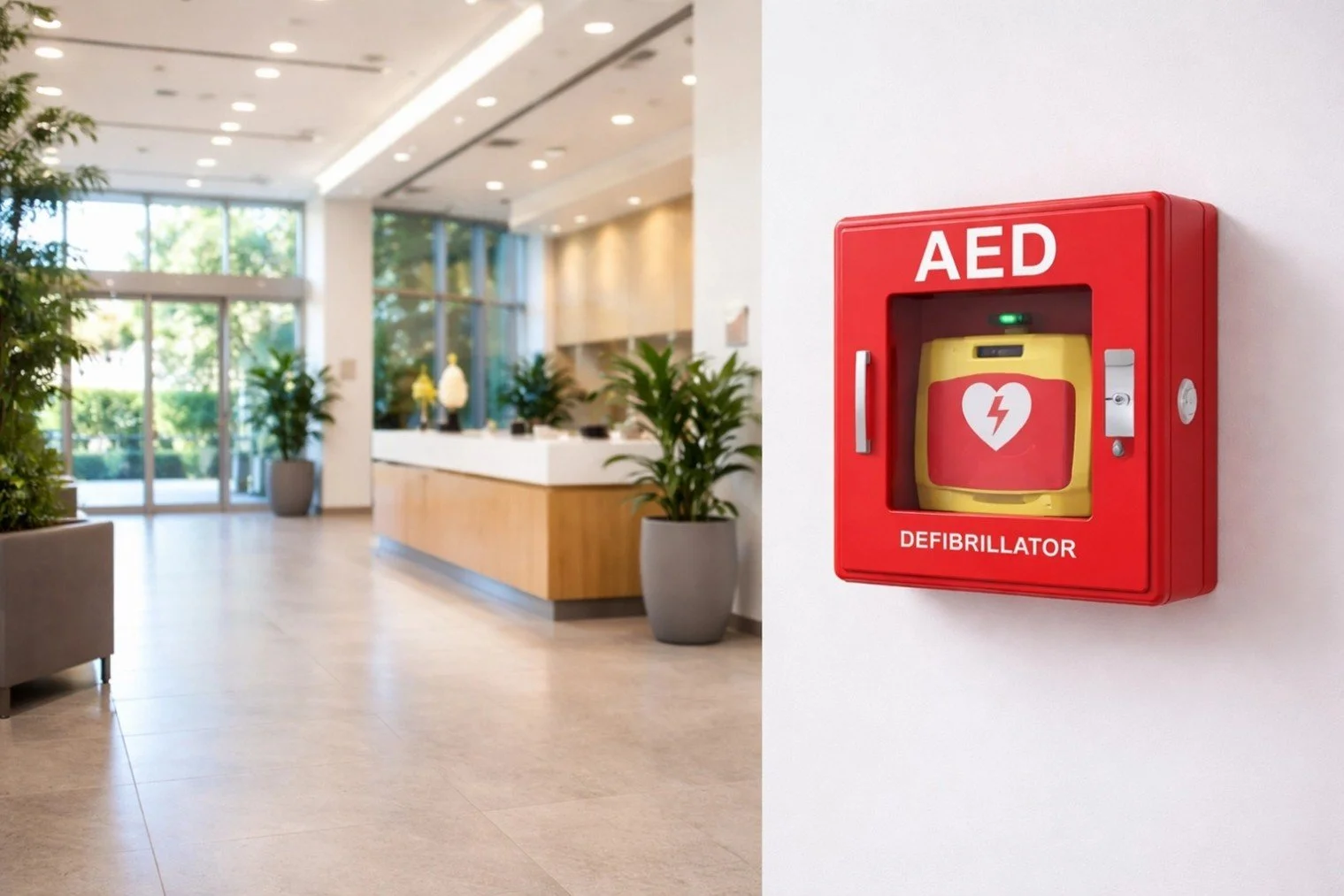
If your building has a publicly accessible floor area of 600 square metres or more, you're required to have at least one AED installed.
Not sure what 600m² looks like? Think of it as roughly the size of three tennis courts, or a medium-sized retail store. Many businesses fall into this category without even realising it.
The Density Rule
For larger buildings, there's an additional requirement: one AED for every 1,200 square metres of publicly accessible floor space.
So if your shopping centre has 3,600m² of public access areas, you'll need a minimum of three AEDs strategically placed throughout the premises.
Quick note for schools: The 1,200m² density rule doesn't apply to educational institutions, but you still need at least one AED if your publicly accessible area exceeds 600m².
Registration Is NOT Optional
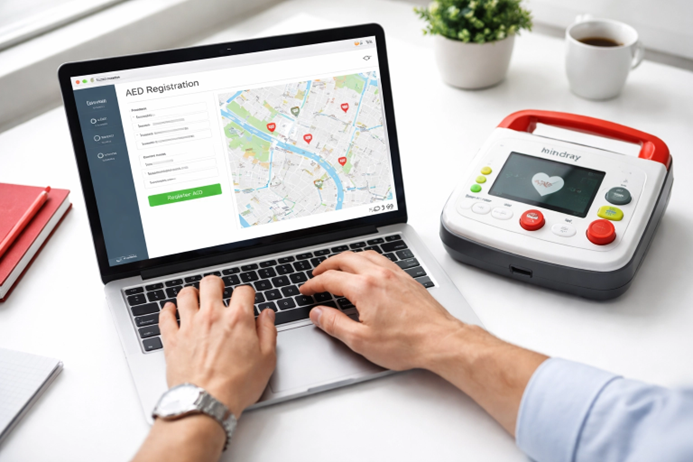
Installing a defibrillator is just the first step. Under the new law, you MUST register your AED with the South Australian AED Register via the SA Ambulance Service/GoodSAM platform.
Why does this matter? When someone calls Triple Zero for a cardiac emergency, dispatchers can direct bystanders to the nearest registered AED. It's a simple step that could genuinely mean the difference between life and death.
The deadline: Your AED must be registered within two weeks of installation.
Head to the SA Ambulance Service website to complete your registration. It only takes a few minutes, and it connects your device to a network that saves lives.
Signage: Make It Visible ❤️
Having an AED tucked away in a cupboard won't help anyone in an emergency. The legislation requires clear, visible signage in two key locations:
Near the device itself – so people can locate it quickly once inside
Outside the building entrance – so passers-by and emergency responders know an AED is available
Think about it from the perspective of someone panicking during a cardiac emergency. They need to find that defibrillator in seconds, not minutes. Proper signage removes the guesswork and gets help to the patient faster.
Maintenance Matters
Your AED isn't a "set and forget" purchase. The legislation requires that all devices are properly maintained in accordance with manufacturer instructions.
For most AEDs, this means:
Monthly visual checks to ensure the device is operational and ready
Annual inspections to verify all components are functioning correctly
Replacing pads and batteries before they expire
A defibrillator that doesn't work when you need it is as good as not having one at all. Regular maintenance ensures your device is always Ready, Willing, and Able to save a life.
At Heart Safe Australia, we can help you set up a maintenance schedule that keeps your AED compliant and operational, no stress required.
The Penalties: What Happens If You Don't Comply?
Let's be direct: non-compliance carries serious consequences.
Failure to install an AED: Up to $20,000 in fines
Failure to maintain an AED properly: Up to $20,000 in fines
Failure to register an AED: Up to $20,000 in fines
Intentionally damaging or removing an AED: Up to $10,000 fine or one year imprisonment
Here's something crucial that many people don't realise: landlords carry the legal responsibility for compliance, not tenants. If you own commercial property, it's your responsibility to ensure AEDs are installed and maintained, regardless of who occupies the space.
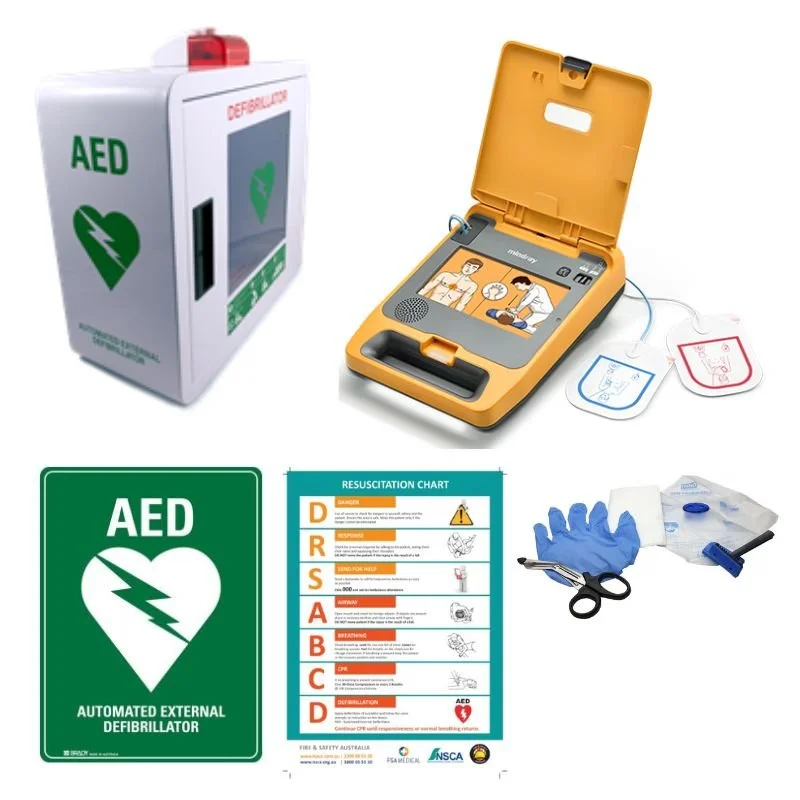
Get your AED/Defibrillator and Accessories
Be READY and ABLE to save a life in case of a cardiac arrest out-of-hospital.
Action Now - Get your defibrillator from Heart Safe Australia
Don't Forget About Vehicles ❤️
The legislation doesn't just apply to buildings. Certain vehicles are also required to have AEDs installed:
Public transport vehicles – trains, trams, and buses
Private vehicles carrying more than 14 people (including the driver) – this includes private bus companies, tour operators, and yes, even stretch limousines
If you operate any vehicle-based business that transports groups of people, check your compliance status now.
Your 4-Step Compliance Checklist
Feeling overwhelmed? Don't be. Here's a simple action plan to get your building compliant:
Step 1: Audit Your Space
Calculate your publicly accessible floor area. If it's over 600m², you need at least one AED. For every additional 1,200m², add another device.
Step 2: Purchase and Install TGA-Approved AEDs
Not all defibrillators are created equal. Make sure you're purchasing a device that's approved by the Therapeutic Goods Administration (TGA) for use in Australia.
Looking for where to buy a defibrillator you can trust? The Mindray C1 is one of our most popular options: it's user-friendly, reliable, and designed for use by anyone, regardless of medical training. Check out our full range of AED defibrillators to find the right fit for your building.
Step 3: Register Your Device
Within two weeks of installation, register your AED on the SA Ambulance Service website. This connects your device to the emergency response network.
Step 4: Install Compliant Signage
Place clear signage near the device AND at your building entrance. Make sure it's visible and follows SA Health guidelines.
How Heart Safe Australia Can Help ❤️
We get it: navigating new legislation can feel daunting. That's exactly why we're here.
At Heart Safe Australia, we don't just sell defibrillators. We partner with businesses, schools, and communities to create environments where everyone is equipped to respond to a cardiac emergency.
Here's how we can support your compliance journey:
Compliance audits to determine your exact AED requirements
TGA-approved AEDs including the trusted Mindray C1
Installation guidance to ensure optimal device placement
Signage solutions that meet legislative requirements
Maintenance programs to keep your devices ready year-round
Training programs through our Heart Safe Workplace, Heart Safe Community, Heart Safe School and Heart Safe Vehicle initiatives
Our mission is simple: empower everyday Australians to save lives. Whether you're a business owner, property manager, school principal, or community leader: we're in your corner.
The Bottom Line
South Australia's AED legislation isn't just a box-ticking exercise. It's a genuine opportunity to make your building: and your community: safer.
Sudden cardiac arrest can happen to anyone, anywhere, at any time. When it does, having an AED within reach transforms ordinary people into lifesavers. And that's something worth investing in.
The deadline has passed. If you're not compliant yet, the time to act is NOW.
Ready to get started?
Visit our Heart Safe Workplace, Heart Safe Community, Heart Safe School and Heart Safe Vehicle Program Initiatives or Heart Safe Australia to explore our range of defibrillators and compliance solutions.
Otherwise contact Heart Safe Australia. Together, let's make South Australia a place where every heart has a fighting chance.
Stay safe, stay prepared, and remember: you have the power to save a life!
: Penny & The Heart Safe Australia Team