Could Your Neighbours Save Your Life? Inside the Heart Safe Neighbourhood Program
When someone collapses from sudden cardiac arrest, every single second matters. But here's the sobering truth: approximately 30,000 sudden cardiac arrests happen across Australia every year, and around 80% of them occur at home, where most people feel safest.
The survival rate? Only 1 in 10 people survive out-of-hospital cardiac arrest in Australia.
But it doesn't have to be this way.
When a defibrillator is used within the first 3 minutes of collapse, survival rates skyrocket to over 70%. The problem? Most neighbourhoods don't have an AED (automated external defibrillator) within a 90-second walk, and most neighbours don't know what to do if someone collapses right in front of them.
That's where the Heart Safe Neighbourhood Program comes in, and it's transforming suburban streets into networks of everyday lifesavers.
What Is a Heart Safe Neighbourhood?
A Heart Safe Neighbourhood isn't just a nice idea, it's a practical, life-saving initiative that brings 2–10 neighbours together to become READY, WILLING, and ABLE to respond in a cardiac emergency.
Here's what that means:
READY , Your neighbours know the signs of cardiac arrest and how to act immediately
WILLING , They're not frozen by fear or waiting for someone else to step up
ABLE , They have access to an AED and the knowledge to use it confidently
We believe that anyone can be a lifesaver, no medical background required. All it takes is a little education, some hands-on practice, and the right equipment within reach.
Most people do NOT know the difference between a heart attack and a cardiac arrest. They do NOT know where the nearest defibrillator is. And they do NOT know how to use one.
The Heart Safe Neighbourhood Program changes all of that.
From Reactive to Proactive: The 90-Second Rule
Let's talk about the traditional approach to emergencies.
Someone collapses. You call 000. You wait. You hope.
That's reactive, and in cardiac arrest situations, reactive often means too late. The average ambulance response time varies, but those first few minutes are CRITICAL. Brain damage can begin within 4–6 minutes without oxygen.
Now imagine this instead:
Someone collapses on your street. Within 90 seconds, a neighbour retrieves a defibrillator from a nearby home or cabinet. Within 3 minutes, the first shock is delivered. CPR is performed confidently while waiting for paramedics.
That's proactive. That's a Heart Safe Neighbourhood.
The goal is simple: ensure that an AED is always within a 90-second walk from anywhere in your neighbourhood, and that multiple neighbours know exactly how to use it.
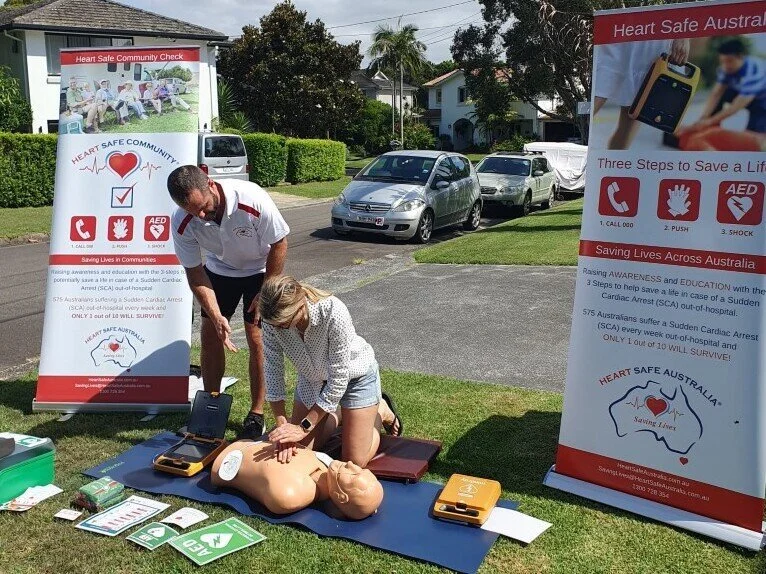
The Heart Safe Neighbourhood Lifesaving Demonstration
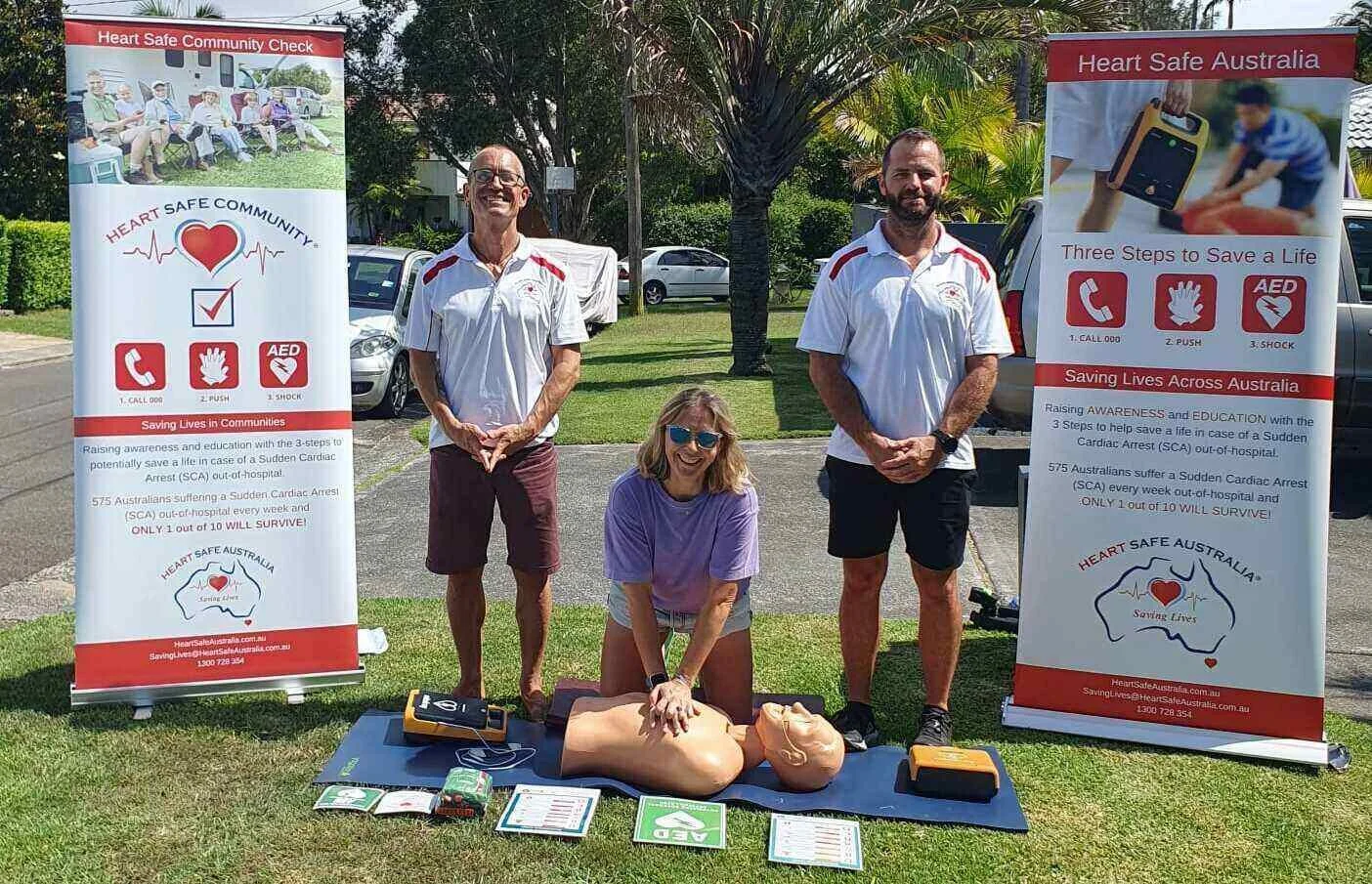
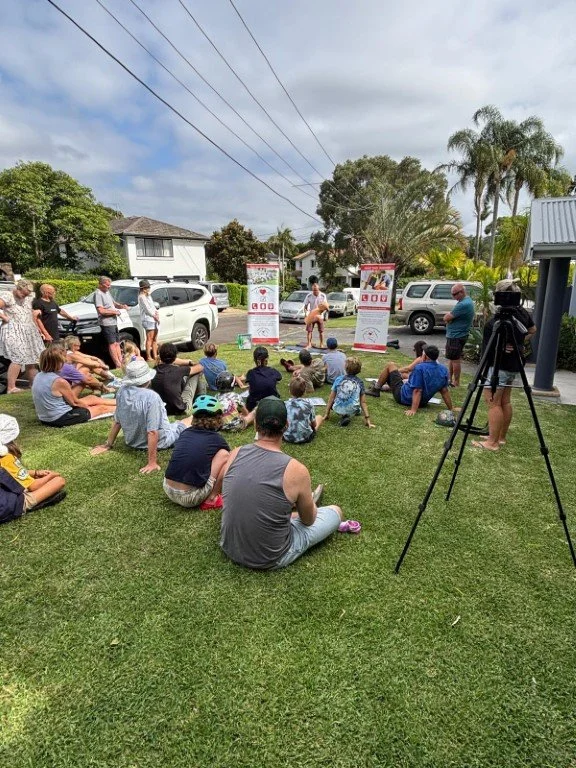
Similar to our popular Heart Safe Workplace Lunch & Learn sessions, we bring the training directly to your street, driveway, or local park.
Our Lifesaving Demonstration is designed to be engaging, hands-on, and NOT intimidating. It typically runs for 60–90 minutes and covers everything your neighbours need to know.
What You'll Learn:
The DRSABCD Action Plan
This is the Australian Resuscitation Council's official emergency response framework:
Danger , Check for dangers to yourself and the patient
Response , Check if the person is conscious
Send for help , Call 000 immediately
Airway , Open and clear the airway
Breathing , Check for normal breathing
CPR , Start chest compressions if not breathing
Defibrillation , Apply an AED as soon as possible
Hands-On CPR Practice
Everyone gets time on the training manikins to practice proper chest compressions. You'll learn the correct hand placement, depth (at least 5cm), and pace (100–120 compressions per minute, think "Stayin' Alive" by the Bee Gees).
How to Use a Defibrillator
We demystify the AED completely. You'll see exactly how to open the device, apply the pads, and follow the voice prompts. Modern defibrillators like the Mindray C1 literally talk you through every step, you can't do it wrong.
Paediatric Emergencies
Cardiac arrest in children is rare but devastating. We show you how to switch the Mindray C1 to paediatric mode and adjust your technique for younger patients.
By the end of the session, you won't just know what to do, you'll have the muscle memory and confidence to actually do it when it counts.
The Heart Safe Neighbourhood Audit Checklist
Ready to assess your own neighbourhood? Here's a simple checklist to get started:
✅ Is there an AED within a 90-second walk from every home?
✅ Do all neighbours know where the AED is located?
✅ Is the AED accessible 24/7 (not locked inside someone's house)?
✅ Is the AED registered with emergency services so they can direct callers to it?
✅ Does everyone know the difference between cardiac arrest and a heart attack?
✅ Do you have a plan for who would respond first if someone collapsed?
✅ Has anyone in your street completed CPR and AED training in the past 2 years?
If you answered "no" to most of these, don't worry: you're not alone. Most Australian neighbourhoods aren't prepared yet. But that's exactly why the Heart Safe Neighbourhood Program exists.
Let's change that together.
The Mindray C1 Defibrillator: Your Neighbourhood's "Doctor in a Box"
When it comes to choosing an AED for your street, you want something reliable, easy to use, and built to last. That's why we recommend the Mindray C1 Defibrillator.
Here's why it's perfect for neighbourhoods:
⚡ Fast Shock Delivery
The Mindray C1 delivers the first shock in under 8 seconds after pad application: faster than most competitors. In cardiac arrest, seconds literally = survival.
👶 Paediatric Switch
Simply flip the paediatric switch for children under 8 years or under 25kg. No need to swap out pads or buy separate equipment.
🔋 4+ Year Life
The battery and pads last over 4 years from the date of manufacture, meaning less maintenance and lower ongoing costs.
🌧️ IP55 Rating
Water and dust resistant, so it can handle outdoor storage in cabinets or even inside weatherproof cases.
🗣️ Clear Voice Prompts
Step-by-step audio instructions guide you through the entire process: even if you've never touched a defibrillator before.
Think of it as a "Doctor in a Box" that's always ready, always reliable, and always there when you need it most.
Want to know more about defibrillators for home use? Check out our guide: Do You Really Need a Defibrillator at Home? Here's the Truth.
Getting Started: Turn Your Street Into a Heart Safe Neighbourhood
Ready to make your neighbourhood a safer place? Here's how to get the ball rolling:
Step 1: Talk to Your Neighbours
Start a conversation. Share the statistics. Gauge interest. You'd be surprised how many people want to help: they just don't know how to start.
Step 2: Book a Lifesaving Demonstration
Contact us at Heart Safe Australia to arrange a session. We'll bring all the equipment, manikins, and expertise right to your street.
Step 3: Invest in an AED
Pool resources with neighbours or designate one household to host the defibrillator in an outdoor cabinet for 24/7 access.
Step 4: Register Your AED
Make sure your defibrillator is registered with emergency services so 000 operators can direct callers to it during an emergency.
Step 5: Spread the Word
Let everyone on your street know where the AED is, how to access it, and who's been trained. Consider creating a simple group chat or community notice.
Ready to Equip Your Neighbourhood?
We've made it easy to get everything you need in one bundle:
🛡️ Defibrillator & Accessories Bundle : $1,795
Includes the Mindray C1 Defibrillator, carry case, spare pads, and a complete CPR responder kit (gloves, scissors, face shield, razor).
👉 Shop Defibrillator & Accessories Bundle
🏠 Defibrillator & Cabinet Bundle : $1,995
Everything from the accessories bundle PLUS a weatherproof wall-mounted cabinet with clear signage: perfect for outdoor installation so the AED is accessible 24/7.
👉 Shop Defibrillator & Cabinet Bundle
Both bundles come with full support, training resources, and everything you need to become a Heart Safe Neighbourhood.
Your Street Could Be Next
Across Australia, we're building a network of Heart Safe Neighbourhoods: one street at a time. From the Northern Beaches to suburban Adelaide, communities are realizing that waiting for help isn't good enough.
They're taking action. They're getting trained. They're installing AEDs. And they're ready to save lives.
Your neighbours could save your life. And you could save theirs.
Learn more about the Heart Safe Neighbourhood Program and book your Lifesaving Demonstration today at heartsafeaustralia.com.au/heart-safe-neighbourhood.
Let's empower every street in Australia to become a place where cardiac arrest doesn't mean certain death: it means neighbours stepping up, acting fast, and bringing someone back.
Stay safe, stay ready, and let's keep saving lives together.
: Penny & the Heart Safe Australia Team ❤️